Ghentu- A roadside bloom braids botany, cinema and resistance
Ghentu’– I came across the word in two Bengali films – ‘Chhaya Surjo’ from the story of legendary feminist writer Ashapurna Debi and ‘Bakso Badal’, scripted by the famous Satyajit Ray.
The woman characters here are defiant, unconventional and like rebel weavers in the social milieu. Starred by Sharmila Tagore and Aparna Sen – two strong personalities in Indian Cinema, in the first film ‘Chaya Surjo’, Ghentu was the name of the female protagonist, a very unlike name for a leading role and in ‘Bakso Badol’ when Aparna Sen was asked by her doctor friend ‘Name your favourite flower’, she replied ‘Ghentu phool’, again very unusual.
Thus, my interest was aroused, what is ‘Ghentu phool’ – some avant-garde architype?
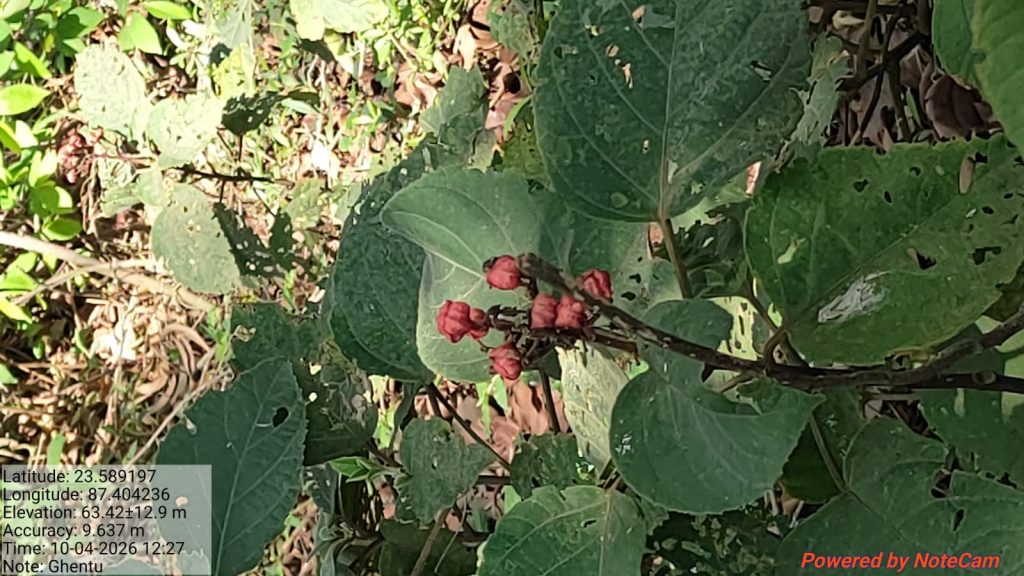
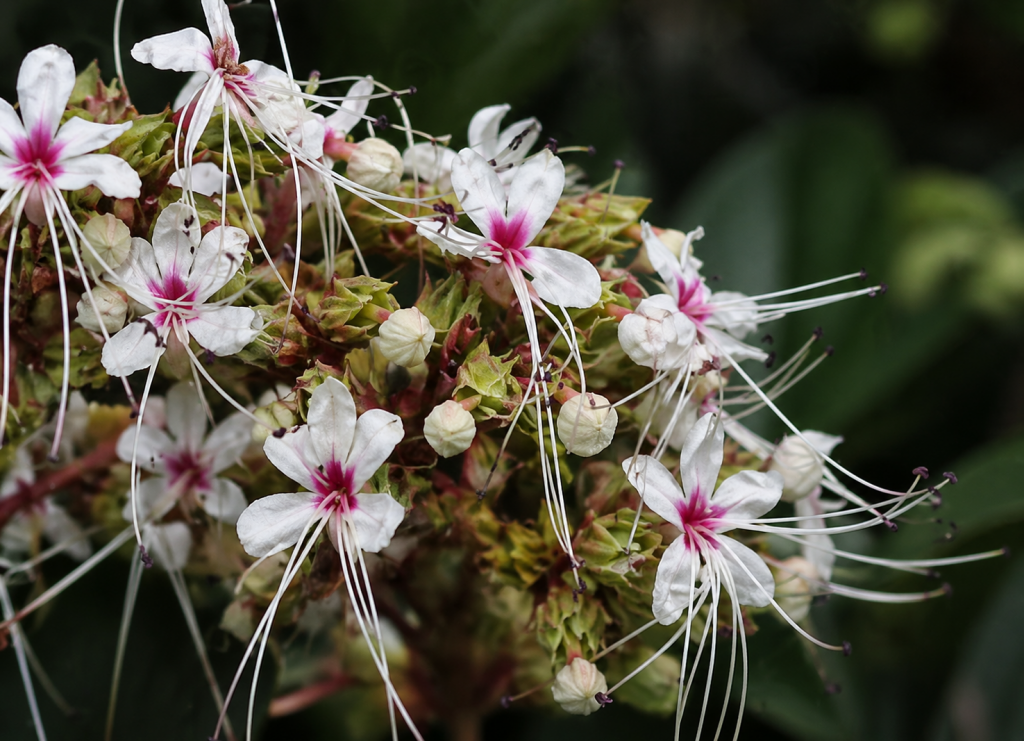
While my work in nature conservation continued, I came across this common yet not very common flower– found in the edges of dry, deciduous forests, a bushy plant thatblooms usually with a white flower. Came to know that it is Clerodendrum sppand became all the more excited when we started to work on ‘Bon jui’ in Sundarban, another Clerodendrum spp. Very recently in April 2026, while doing some surveys in the red lateritic zone of Paschim Bardhhaman, suddenly found one plant again, but this time with a red flower – a red ‘Ghentu phool’? On the edges of a Sal forest, after a 30 m width of mango orchard, it was there unnoticed along with the bushes alongside a narrow pucca road. The flowers were velvety red, and the green leaves when touched also felt velvety.
Again, searching began in Prain’s Bengal Plants; following discussion with my colleague Saikat, who is a botanist, realized that it is scientifically known as Clerodendruminfortunatum. Linneaus named the genus in 1753, from India. It happens to be a plant with lot of medicinal properties and commonly used in Ayurveda and Unani to cure colic pains, skin diseases, intestinal worms and even snake/scorpion bites. Whereas scientists and taxonomists continue to debate on its nomenclature from Clerodendron to Clerodendrum, then back to former and now Volkameria etc etc , the flower has been etched in the Bengali mindscape as the ever famous ‘Ghentu phool’; nature is truly the life in entirety, she is weaved and braided in our culture, our dreams and our identity.
Ajanta Dey,
Joint Secretary and Programme Director
Nature Environment and Wildlife Society